Simon does
If you bet on the NFL, you’re either guessing or you’re using Simon. Every line you see was priced by a machine built to beat you. Simon is the machine on your side: thousands of inputs on every game — live odds, matchups, weather, injuries, chatter on X — and one answer: exactly what to bet. 85% this season.*
85%
of Simon’s graded NFL picks have hit this season. You only need 52.4% to break even at standard −110 odds.*
Everything above 52.4 comes out of the book’s pocket. Simon has spent the whole season up there.*
*Share of graded Simon NFL picks that won during the current regular season to date; pushes and voids excluded. Break-even figure is the win rate needed at −110 odds. Past performance does not guarantee future results. Phone screen is an illustration of the pick format.
The sportsbook isn’t guessing. Why are you?
Every line you see was set by a team of analysts and algorithms whose only job is to take your money. Then you show up with a hunch, a hot take from a podcast and a team you’ve loved since you were nine. That’s not a fair fight, and the books know it.
You know the Sunday: green all afternoon, one backdoor cover at 7:20, and the whole card’s dead. That’s not bad luck. That’s pricing.
Gut picks
You bet the team you like, the story you heard, the game you’re watching anyway. The books price that bias into every line.
Hot takes and touts
TV analysts, Discord “cappers” and podcast locks rarely show a full record. When they’re wrong, you’re the one who paid.
Not enough time
Injury reports, weather, line moves and matchup data change right up to kickoff. No one person can track it all across a full slate.
Simon takes the guessing out. All of it.
Thousands of inputs. One answer.
No human can read every injury report, weather model, line move and matchup stat on a 16-game slate in the three hours before kickoff. Simon does it for every game, every week, and weighs it all through proprietary prediction models built for one job: finding the bets the market got wrong.
Detroit @ Green Bay
Lions −3.5
−110 · 2 units
At 85%, the line only goes one way.
Most bettors spend a season hovering around break-even and slowly bleeding the vig. And break-even isn’t free: three $100 bets a week at coin-flip rates hands the book about $60 a month in vig alone. You’re already paying for picks. You’re just paying the book. At Simon’s hit rate, flat-betting one unit per pick stacks up fast. Here’s what 40 picks at 85% and −110 odds look like at $100 a unit.
+24.9
Units profit
+$2,491
At $100 / unit
12×
Standard plan cost covered
Illustrative: a 85% win sequence at −110, 1 unit per pick. Not a record of actual results.
Every way to win the week. Covered.
Locks
The plays the model rates highest on the slate. Every one of them, every week.
Standard + PremiumSpreads
Side picks where Simon’s number and the book’s number disagree the most.
Standard + PremiumParlays
Up to three a week, built only from legs the model already likes on their own.
Standard + PremiumPlayer Props
Yards, receptions and touchdowns, priced against Simon’s player projections.
PremiumWinning
85% of graded NFL picks this season. That’s the whole point.
Every planCopy. Paste. Cash.
Every pick arrives with the line, the price, the unit size and Simon’s confidence score. Punch it into your book and go watch the game.
Example slips illustrating the pick format. Payouts shown per $100 risked at the listed odds. Odds vary by sportsbook and move before kickoff.
Not screenshots of promises. Screenshots of payouts.
Twenty cashed tickets and counting, filed by week: spreads, totals, player props, same-game parlays and two first-touchdown calls. The newest batch is Thursday night’s card, which went 6 for 7.
$3,427
Wagered
$12,301
Paid out
20
Winning tickets
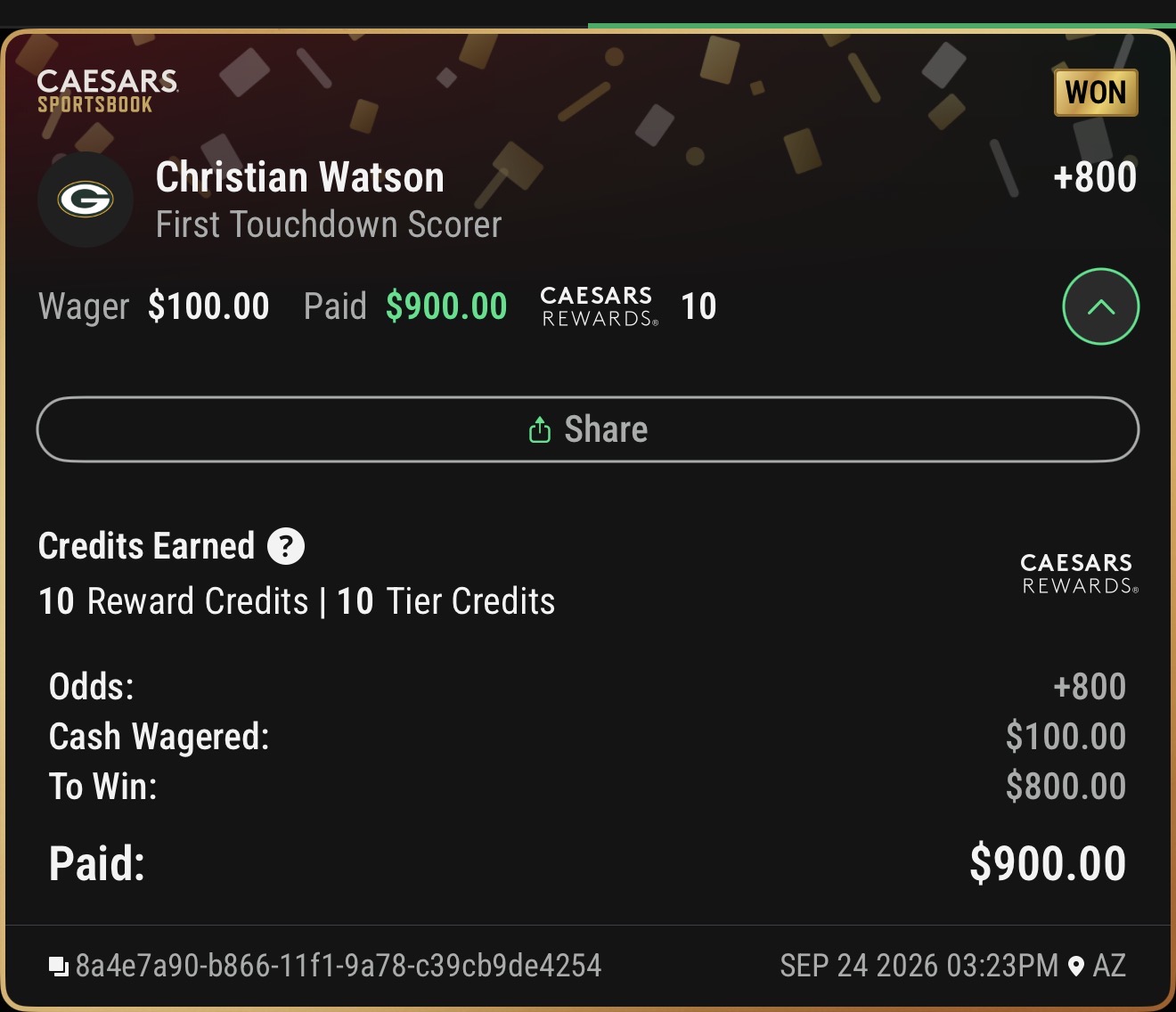
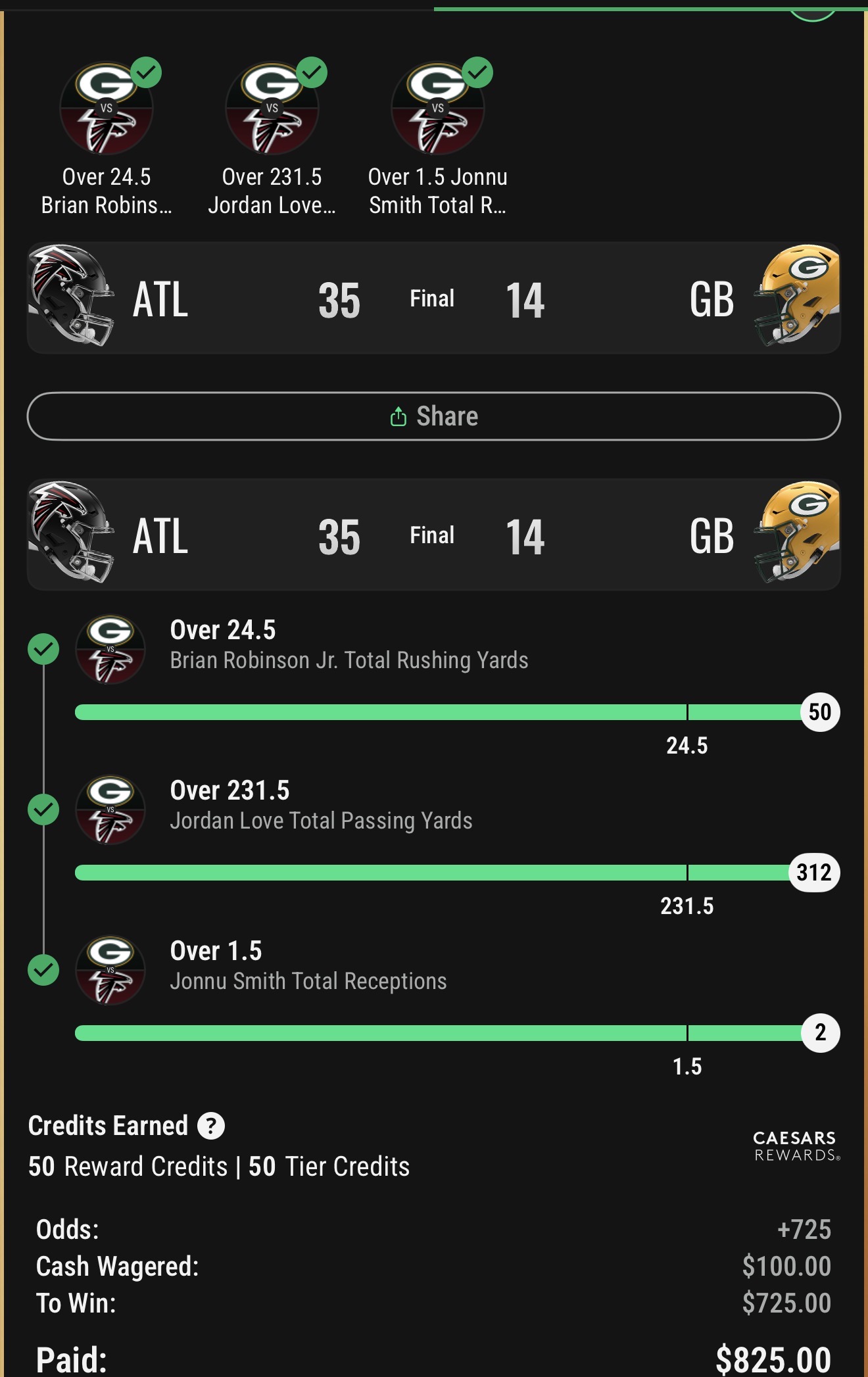
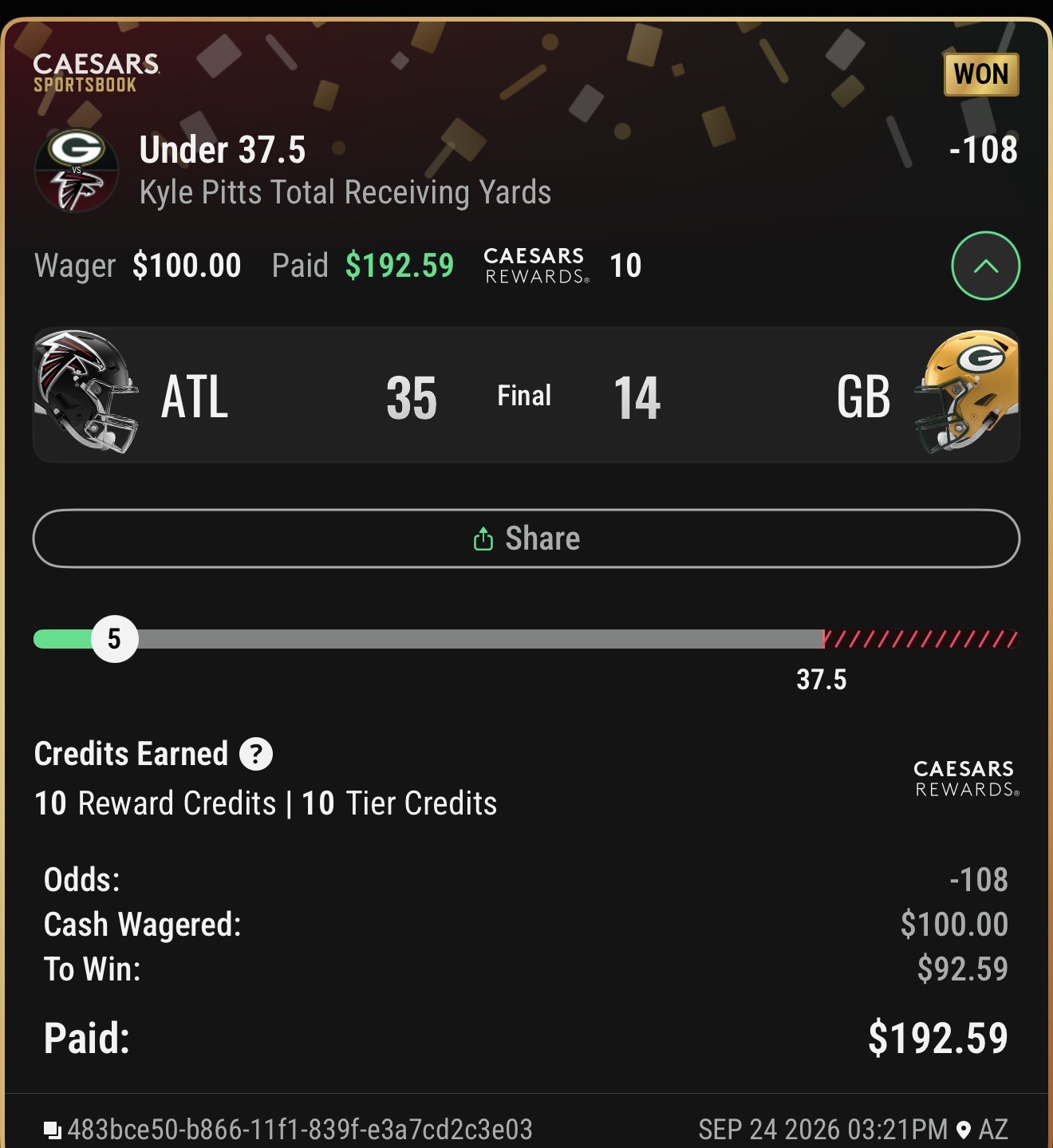
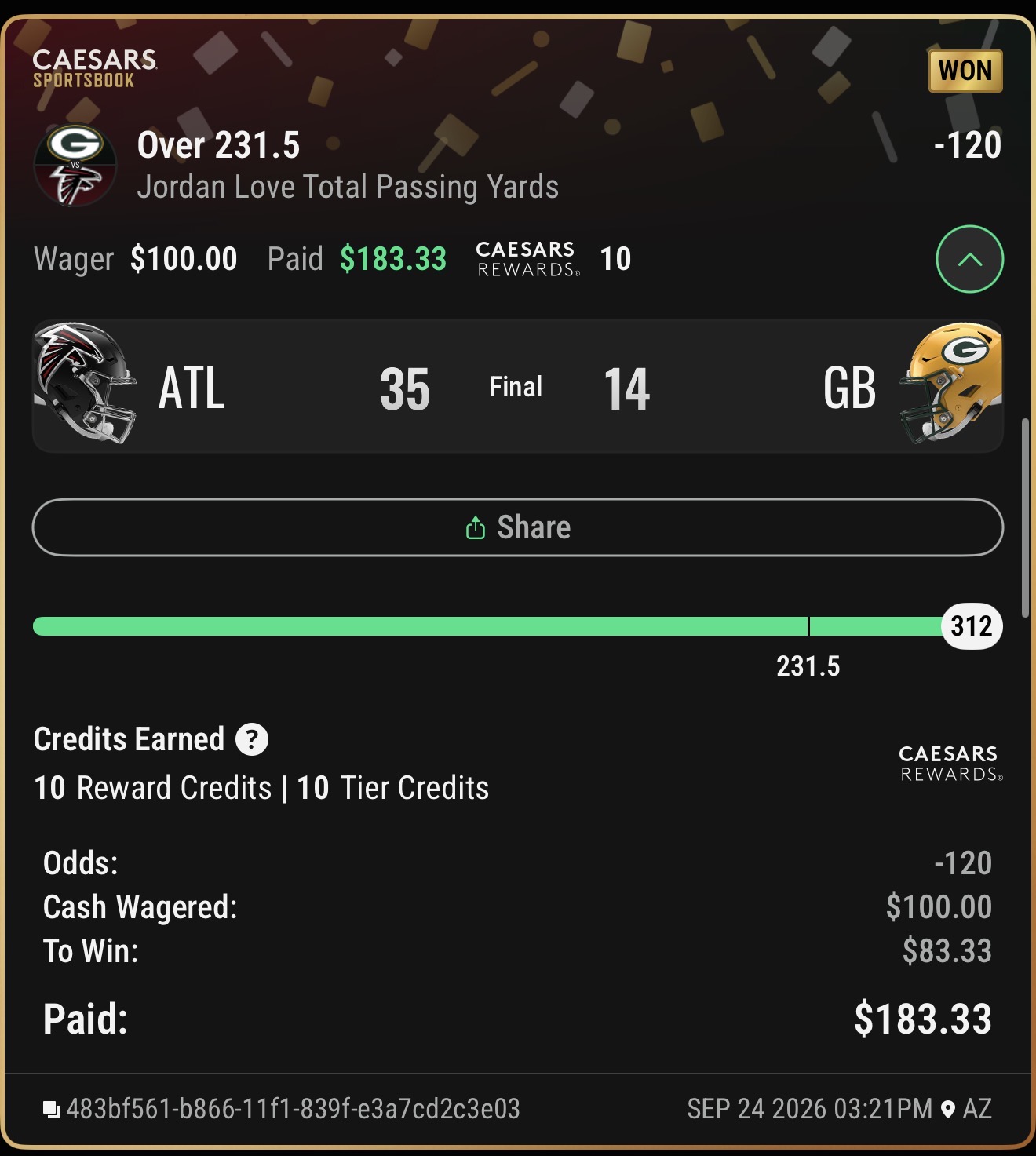
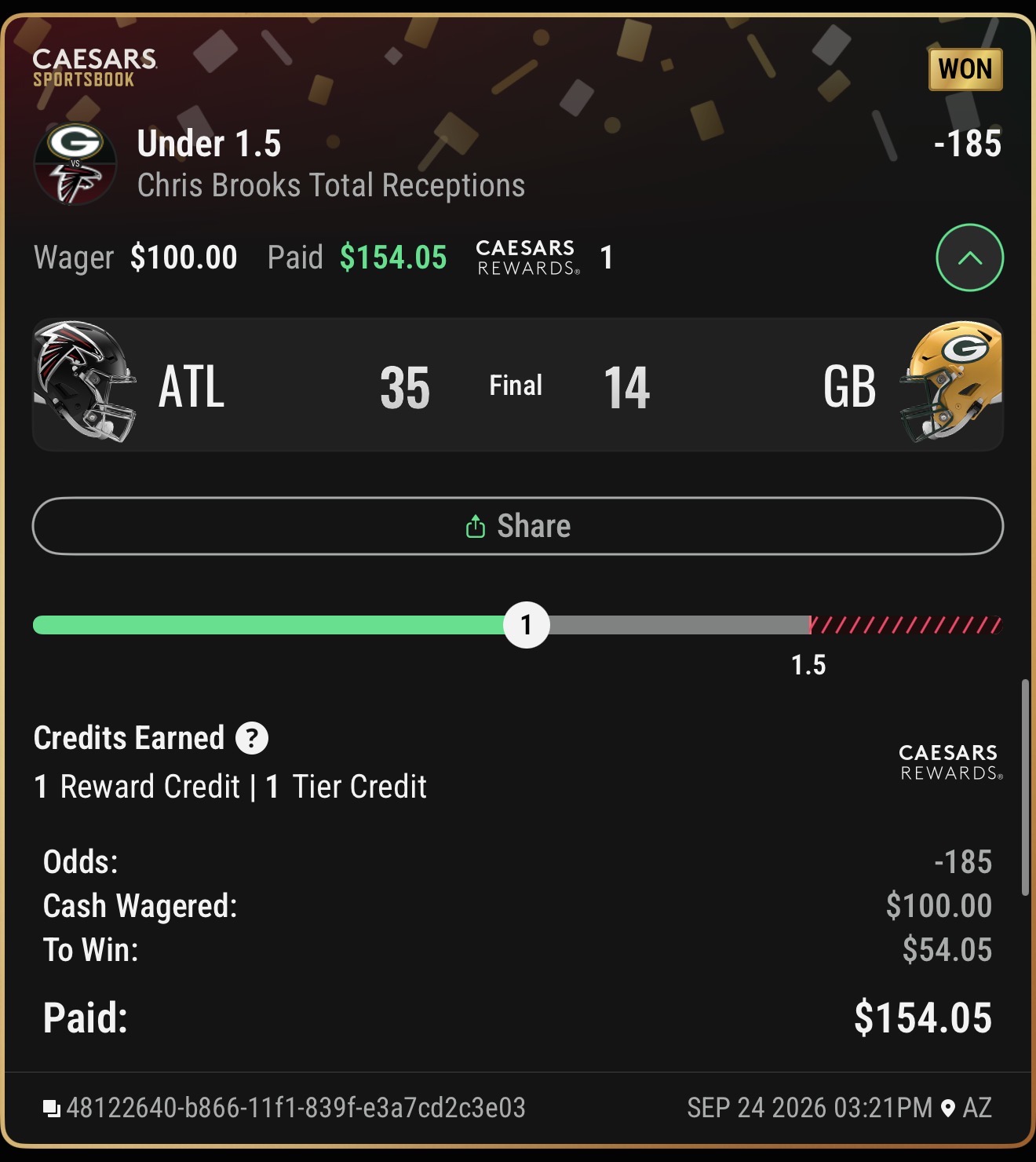
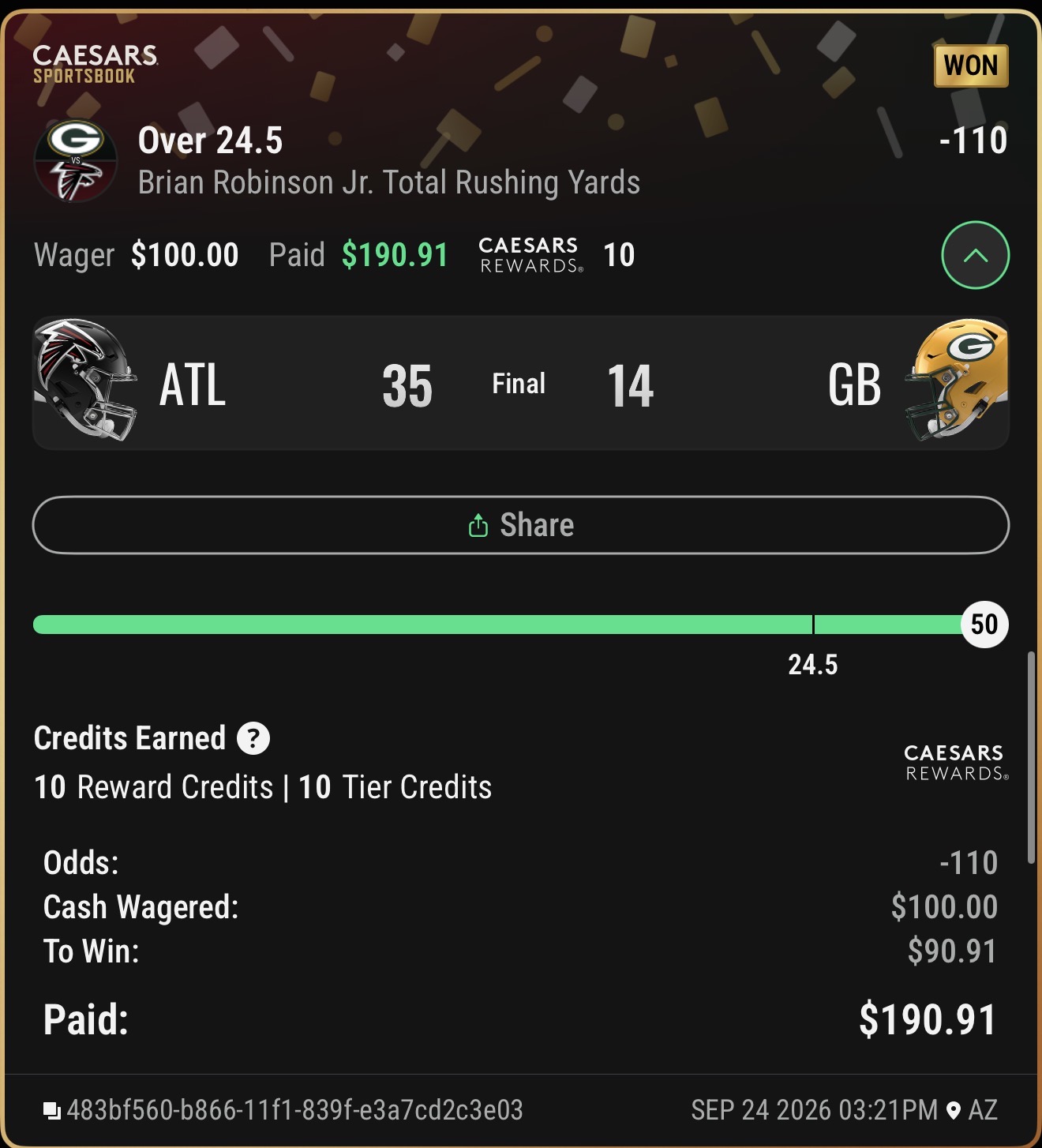
Actual wagers placed on Simon picks. Includes college football tickets and live bets. A selection of wins, not a complete record; see the season hit rate above for full performance. Week 4 shows the winners from the Thursday night card, which finished 6-for-7; the miss is in the graded record. Sportsbook shown for illustration; Simon is not affiliated with any sportsbook.
Not ready to pay for picks? Don’t.
The Edge is Simon’s free NFL guide: every game on the current week’s slate, broken down by the model, plus one pick from Simon’s card. Free, in your inbox. Read it for a few weeks, bet the free pick, buy the full card when the record’s earned it.
21+ only. The Edge is analysis for entertainment and informational purposes; no outcome is guaranteed.
They stopped guessing. Here’s what changed.
“I’ve paid for picks before and always ended up chasing. With Simon I just open the email Sunday morning, place what it says, and go watch the games. First month covered the whole Season Pass.”
“The player props are the difference. I never would have touched some of these lines on my own and they keep hitting.”
“What sold me is the “play to” number. It tells me when to skip, so I stopped taking bad lines just to have action.”
“I don’t have time to read injury reports all week. Simon does it for me, and the stake calculator means I never overbet.”
“Three weeks in and I’m up more than I was all of last season. The confidence scores make it easy to know where to put real money.”
Testimonials from Simon members. Individual results vary and are not typical or guaranteed.
Two ways to get every card. Zero guesswork in either.
At drop time the picks go live in your members area and land in your inbox as a step-by-step PDF. Both tell you the game, the market, the worst number to take and exactly how much to bet.
Preview of the members area and emailed PDF. Picks shown are a sample card.
Three ways to bet Sunday.
Three hours out. Every game day.
Late enough to catch final injury reports and weather. Early enough to lock the number before the public moves it.
5:15 PM ET
Thursday Night Football
3 hrs out
Late-season Saturday slates
10:00 AM ET
Early, late and Sunday night
5:15 PM ET
Monday Night Football
1,000 members. Then the doors close.
Simon bets the same card we send you. Pile too many people onto the same number and the line moves, the price gets worse, and the edge starts eating itself. So membership stops at 1,000 — one thousand people with the inside track, and that’s it. When it’s full, a spot opens only when someone walks away. And you tell me, who walks away from a seat at this table? Take yours while there’s one open.
One good Sunday covers the month.
You’re already paying for picks — a coin-flip season at −110 sends the book about $60 a month in vig, and that’s if you break even. Flip the direction: a three-leg parlay at +596 returned $596 on $100. A two-leg SGP turned $400 into $1,416 on Sep 17. Simon sends plays every game window, all season. Or lock the whole year once and stop thinking about it. Membership caps at 1,000; while there’s room, there’s room.
$199/ month
NFL picks every week: every lock and up to three parlays.
$599/ month
Every sport, plus Simon’s player props. Billed monthly.
$1,750/ year
Premium for every sport Simon covers, for a full year. One payment.
If Simon isn’t for you after your first card, one email within 7 days and you pay nothing. No forms, no phone call, no “retention specialist.” Your past losses weren’t a skill problem — and trying the fix shouldn’t cost anything either.
Standard and Premium are billed monthly and renew automatically until cancelled; cancel anytime and keep access through the end of your paid month. Season Pass is billed $1,750 once per year and covers Premium picks for every sport Simon offers for 12 months, then renews yearly until cancelled. Early-access sports (MLB, NBA, NHL, MMA) launch on a rolling basis. Payout examples are arithmetic at the stated odds, not projected results. Simon sells picks and analysis only; you place every wager yourself with a licensed sportsbook.
Questions before kickoff.
All of them. Simon gives you the line, the price and the unit size; you place the bet wherever you already have an account. Prices differ slightly from book to book, so it pays to shop the line.
Stop guessing.
Simon does winning.
Thinking you’ll watch this week from the sidelines first? That’s the gut talking. It’s the same gut that’s been picking your bets for years — and the book is counting on you listening to it.
The next card drops in — : — : —. Be holding it when it does.
21+ · Capped at 1,000 members · Cancel anytime